
The Fine Print That Turns a Signing Bonus Into a Loan


A joining bonus clawback clause is the two or three sentences near the bottom of the offer letter that turn a signing bonus into a conditional loan. Nobody reads that part carefully when the number at the top of the offer letter just got bigger and the recruiter is already moving the conversation on to a start date. They should read it first, actually, before the start date or anything else. The clause decides whether leaving early costs you the bonus, the tax already withheld on it, or both, and the difference between those outcomes can run into lakhs on a bonus that looked simple when you accepted it.
How a Joining Bonus Clawback Clause Actually Gets Written
Most clauses follow the same shape: a bonus amount, a minimum service period, and a repayment obligation triggered if you leave before that period ends. Some scale the repayment down month by month, so leaving at month ten of an eighteen month clause costs less than leaving at month two. Others are flat: leave a day early, repay the full amount regardless of how long you stayed. The flat version is worse for you and more common than it should be, and it’s worth asking the recruiter directly which structure your letter uses before you assume it’s the pro rated kind.
The Service Period: Usually Twelve to Twenty Four Months
Clawback periods commonly run somewhere between twelve and twenty four months. I don’t have a systematic count of how many employers use each length, so treat that range as typical rather than universal, and read your own letter’s number rather than assuming it matches a market average. What matters more than the exact month count is what the clock starts on: your official date of joining as stated in the appointment letter, not the date you accepted the offer, and not the date the bonus was actually paid into your account, which can lag joining by a payroll cycle or two.
Gross or Net: The Question That Costs People the Most
This is the clause detail that catches people out, and it’s simple once you see it. Your employer withheld tax on the bonus the moment they paid it. That withholding-at-source mechanism on salary income sat in Section 192 of the Income Tax Act, 1961 for years, requiring anyone paying salary income to deduct tax at the time of payment, at the average rate for that year, on the employee’s estimated annual income.
I checked the Press Information Bureau’s release on the Income-tax Act, 2025 on 7 September 2026: the 1961 Act was replaced by the Income-tax Act, 2025, in force since 1 April 2026, which renumbered sections across the board, so the salary-TDS provision now sits at a different section number in the current Act. I haven’t independently verified the new number against the Act text itself, so I’m not printing one here; check the current section on the Income Tax Department’s site before you cite it anywhere. The mechanism hasn’t changed, though: if a joining bonus clawback clause says you must repay the “gross” amount, you’re repaying money you never actually received in full, since the tax portion went straight to the government, not into your bank account.
The gap between gross and net pay is the same one that trips people up when they compare CTC against in hand salary in the first place. A net clawback asks for only what you actually received. A gross clawback asks for the full pre tax figure, which means the government keeps the tax it already collected and you’re out that amount unless you can recover it separately through your tax return, and that recovery is not guaranteed.
What a 2016 tax tribunal case shows about the gap
I checked a 2016 Chennai tribunal order, S.S.N. Ravi vs ACIT (ITA No. 933/Mds/2015) on indiankanoon.org on 7 September 2026: the tribunal held that a sign on bonus repaid to a previous employer could not simply be deducted from that year’s taxable salary. The tax already withheld on the original bonus doesn’t come back automatically just because the bonus itself got repaid. On a bonus in the twenty to thirty percent tax bracket, a gross clawback can mean repaying five to nine thousand rupees more for every lakh of bonus than you’d owe under a net clause. Ask which version your letter uses. If it doesn’t say, that’s the single question to raise before you sign, not after you resign.
Laid Off vs Resigning: Does the Clawback Still Apply
Clawback clauses typically carve out involuntary termination, meaning a layoff or redundancy shouldn’t trigger repayment the way a voluntary resignation does. Typically is doing real work in that sentence. Some letters state the carve out plainly. Others don’t mention involuntary exit at all, which usually gets read in the employee’s favor if it ever goes to a dispute, but “usually gets read in your favor” is not the same as a written guarantee, and it’s not something you want to be arguing about after a layoff has already happened. Check the letter for words like “for any reason” attached to the repayment trigger. That phrase, if present, tends to mean the clawback applies regardless of why you left, layoff included, and it’s worth pushing back on before you sign rather than discovering it during a reduction in force.
If your notice period deduction and a bonus clawback both get pulled from the same final settlement, there’s a separate limit worth knowing. I checked Section 7(3) of the Payment of Wages Act, 1936 on indiankanoon.org on 7 September 2026: total deductions from wages in a single wage period are capped at fifty percent, or seventy five percent where part of it goes to a cooperative society payment. A bonus clawback recovered as a lump sum demand rather than a payroll deduction may not fall under that cap at all, since it’s framed as a separate recovery rather than a wage deduction, so don’t assume the fifty percent ceiling protects you here without checking how your specific letter frames the recovery.
Negotiating the Clause Before You Sign
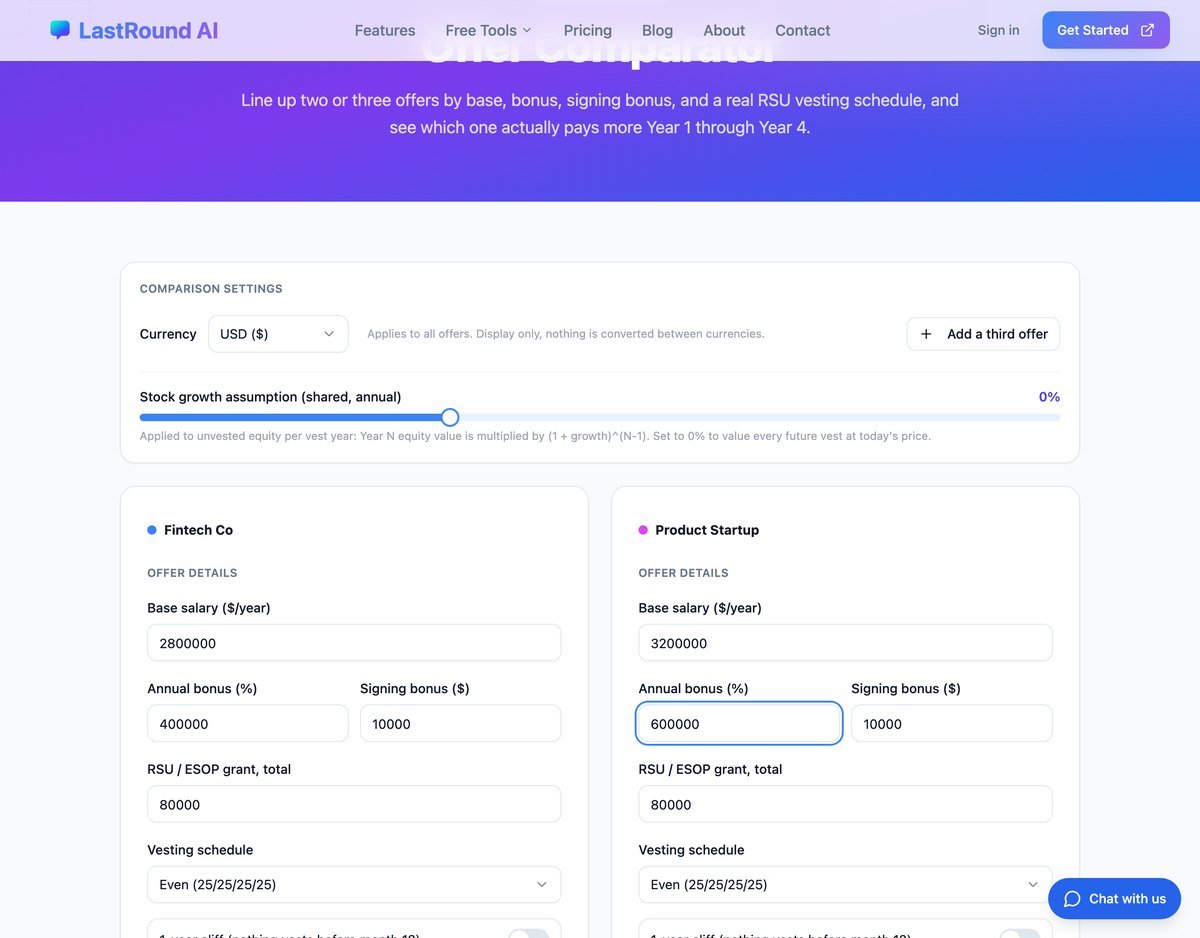
Three asks are realistic, and none of them require much more awkwardness than the rest of a salary negotiation you’re already having. Ask for a pro rated repayment schedule instead of a flat one, so leaving at month sixteen of an eighteen month clause costs a fraction rather than the whole amount. Ask for a net, not gross, clawback, explicitly in writing, using that exact word if you can get it in the letter. Ask for an involuntary termination carve out stated in the clause itself, not implied by silence. If you’re weighing this offer against another one that has a smaller bonus but no clawback at all, LastRound AI’s offer comparator lines up both letters side by side on base, bonus, and RSU, which makes the real trade off easier to see than comparing two PDFs in separate tabs.
Recruiters can say no to all three asks, and often will for standard roles below a certain level. Asking still costs nothing, and a written offer with a pro rated, net, involuntary-exit-carved-out clawback is a materially better offer than the same headline bonus without those three words in it, even though the number at the top of both letters looks identical.
Doing the Math Before You Decide to Leave Early
Say a fifteen lakh joining bonus carries an eighteen month, gross, flat clawback, and a better offer shows up at month eleven. The math isn’t just “do I want the new job.” It’s whether the new offer’s extra pay clears the repayment plus the tax gap within a reasonable time, and whether the new employer will cover any part of that repayment the way some do for candidates they want badly enough.
A flat gross clawback on fifteen lakh, at a thirty percent marginal rate, means writing a check for the full fifteen lakh while having banked roughly ten and a half lakh after tax when it was paid. That four and a half lakh difference is the real cost of leaving early under a flat gross clause, and it’s a materially different number from what a pro rated net clause on the same bonus would cost at the same eleven month mark, which would be closer to a third of the after tax amount, not the whole pre tax figure.
Run that arithmetic against your own numbers before you accept a counter offer or a new role, not after. A recruiter selling you on a new package has no reason to bring up your old clawback clause, and it’s easy to forget a number you signed away eleven months ago when a bigger one is sitting in front of you right now.
What to Actually Check
Read your own joining bonus clawback clause for four things: the service period and what date it starts from, whether repayment is gross or net of tax, whether involuntary termination is explicitly carved out, and whether the repayment schedule is flat or pro rated. If your counter offer negotiation is already underway, fold these into the same conversation instead of raising them separately after the comp number is settled. None of this is a reason to turn down a bonus. It’s a reason to know exactly what you agreed to, in case a year and a half from now you’re the one deciding whether to stay eleven more months or write a check.

Written by
Krishna Naga
Writes about hiring processes at large tech companies and how candidates can prepare for them.